
Vacation Rental Channel Managers: Top Providers and How to Choose the Right One


Valerii Checha
Head of Business Unit
Travel agency software
May 05,202611 min read1356 views
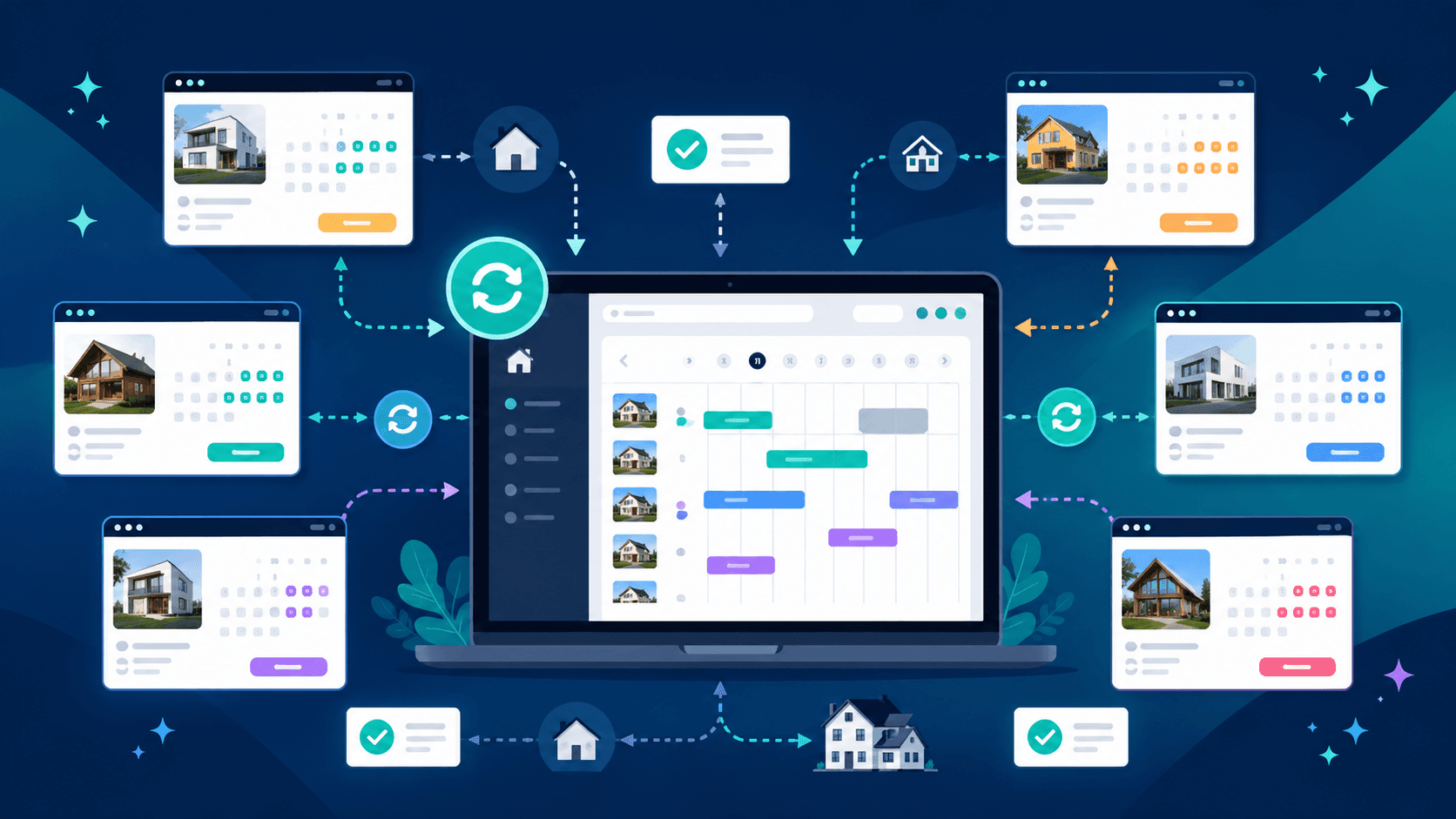
Many hospitality businesses are still trying to handle listings manually across platforms like Airbnb, Booking.com, and Vrbo.
This can work when you only have a few properties. But once you start growing, things get messy fast.
From our experience in travel software development at Onix, most clients come to us when their operations begin to scale. Common issues they face include:
- Double bookingsInconsistent pricing across platforms
- Outdated availability
- Spending excessive hours on manual updates that should be automated
- Lost revenue opportunities
And in 2026, with the short-term rental market growing and multi-channel distribution becoming standard, doing all this manually just doesn’t scale anymore.
And the solution is vacation rental channel managers that allow you to sync listings across multiple platforms, keep availability consistent, and reduce manual work.
In this article, we’ll break down the best vacation rental channel managers 2026 so you can choose the right solution among dozens on the market.
A quick look at what’s ahead:
- Top vacation rental channel managers in 2026
- Vacation rental channel manager features that matter most
- Comparison table of the best vacation rental channel managers
- Checklist to choose the right solution for your business
What is a channel manager for vacation rentals?
A channel manager is a tool that:
- acts as a central hub
- helps you manage everything in one place
- keeps all your listings in sync
According to Market Growth Reports, the global channel manager market is expected to reach $2,404.12 million by 2035.
Why is there such increasing adoption? Here are the key drivers:
- 63% of hotels report increased revenue after implementation
- 41% fewer double bookings due to real-time room inventory updates and pricing synchronization
- 85% reduction in manual workflows, freeing up staff and bringing more efficiency
- over 70% of three-star hotels adopted integrated systems to improve revenue yield
How does a channel manager work in practice?
A guest books on one platform → those dates are instantly blocked everywhere else
You update pricing → it changes across all platforms in real time
Behind the scenes, it connects to OTAs via APIs and continuously syncs:
- Availability (Prevents double bookings)
- Rates (Keeps pricing consistent or dynamic)
- Reservations (Centralizes all booking data)
A channel manager is part of a big hotel system.
The typical setup of top vacation rental channel managers looks like this:

Depending on your business, you’ve got a few ways to acquire a channel manager:
- PMS with built-in channel manager
Best if you want something simple and quick to launch
- Standalone channel manager
Good if you already have other tools in place
- Custom-built solution
Ideal for complex operations or large-scale growth
From our experience at Onix, growing rental businesses often reach a point where off-the-shelf tools can’t keep up, especially when dealing with multiple integrations or custom pricing logic. That’s when a custom approach to channel management becomes a must.
What are the Main Types of Vacation Rental Channel Managers?
Not all channel managers are built the same. Depending on your business size, tech stack, and growth plans, the “right” type can look very different.
In practice, we usually group the top vacation rental channel managers 2026 into such main categories:
Basic channel managers
Such tools focused on syncing your calendars across platforms like Airbnb, Booking.com, and Vrbo.
| What they do: | Limitations: | Best for: |
|
|
|
Advanced channel managers (with automation)
This is where things get more powerful. These tools go beyond syncing and start helping you automate and optimize your business.
| What they do: | Why people choose them: | Best for: |
|
|
|
Read also: Hospitality Tech Trends That Are Reshaping Industry and Guest Engagement
All-in-one PMS + channel manager platforms
These combine everything into one system, instead of juggling multiple tools, you manage everything from a single dashboard.
| What they do: | Why it’s useful: | Best for: |
|
|
|
Custom or API-based solutions
At Onix, this is where we see the biggest demand. At a certain scale, ready-made tools are often not enough. And clients turn to us for solutions that allow full control, deeper integration, and customized pricing strategies.
| What they do: | Why companies go this route: | Best for: |
|
|
|
So, which type should you choose?
It really comes down to your current setup and where you’re heading:
If you’re just starting → keep it simple
If you’re growing → focus on automation
If you’re scaling big → flexibility becomes key

Learn how Onix built a scalable architecture for a travel platform that allows the business to grow without performance concerns.

What are the Key Features of Modern Channel Managers?
Modern channel managers have become the core system behind multi-platform distribution, helping you automate work, avoid mistakes, and grow revenue.
Here are the core features of channel managers for vacation rental property:
Real-time calendar & availability sync
This is the foundation of any channel manager.
What it does:
- Updates availability instantly across all platforms
- Blocks dates everywhere when a booking happens
Why it matters:
- Prevents double bookings (often reduced by 99%)
- Eliminates manual calendar updates
- Keeps listings accurate everywhere
Multi-platform listing distribution
Channel managers let you manage listings across multiple platforms from one place.
What it includes:
- Airbnb, Booking.com, Vrbo, and more
- Centralized listing management
Why it matters:
- Expands your reach without extra effort
- Increases occupancy (often by 15–30%)
- Keeps listing content consistent
You scale faster without managing each platform separately.
Learn how we helped to create the top LGBTQ accommodations booking!
Pricing & rate automation
Modern tools include dynamic pricing features that automatically adjust your pricing based on different factors.
What they use:
- Demand
- Seasonality
- Occupancy
- Custom rules
What you get:
- Revenue increase (often 10–20% per property)
- Time saving on manual updates
- Competitiveness
Some teams connect external pricing tools for even better optimization.
Learn more: AI and Machine Learning in the Travel Industry
Reservation & booking sync
In addition to availability, channel managers also centralize all bookings in one place.
What this means:
- All reservations in one system
- Guest data synced automatically
Why it matters:
- Saves hours of manual work
- Reduces human errors
- Gives you a single source of truth
In practice, teams often cut admin workload by 30–50% after consolidating reservations.
OTA integrations
For stable synchronization, you need strong integrations with platforms like Airbnb, Booking.com, and Vrbo.
What good integrations provide:
- Fast and accurate data syncing
- Fewer delays and errors
- Support for features like instant booking
The quality of these integrations often determines how reliable your entire system will be.
Reporting & performance tracking
Modern channel managers also give you insights into how your business is performing.
What you can track:
- Occupancy rates
- Revenue
- Booking sources
Why it matters:
- See which platforms perform best
- Optimize pricing and distribution
- Focus on what really drives results
For example, many managers discover that 70–80% of bookings come from just 2–3 channels, allowing them to focus their efforts where it matters most.
From our experience at Onix, these features are not just “nice to have.” They directly impact:
Revenue through better pricing and wider distribution
Efficiency by automating manual work
Scalability by keeping everything under control as you grow
What is the Best Channel Manager for Vacation Rentals?
Your choice of the best vacation rental channel managers really depends on how your business works.
Best vacation rental channel managers comparison:
| Channel Manager | Best For | Channels / Coverage | PMS | Key Strengths | Pricing |
| Hosthub | Multi-platform distribution | 200+ channels | Limited | Fast sync, strong reliability, prevents double bookings | ~$15–30/property/month |
| Your.Rentals | Beginners, small hosts | Major OTAs | Limited | Simple setup, easy onboarding, pay-as-you-go | Commission-based |
| Lodgify | All-in-one solution | OTAs + direct booking site | Built-in | Website builder, automation, unified system | From ~$17/month |
| Guesty | Scaling businesses | Major + niche OTAs | Full PMS + integrations | Advanced automation, unified inbox, scalability | Custom pricing |
| Smoobu | Mid-sized businesses | OTAs + direct bookings | Built-in | Ease of use, balanced features, automation | ~$20–40/month |
The “best” tool is the one that:
- Fits your current workflow
- Supports your growth
- Doesn’t create more manual work
Schedule a free consultation now and get expert advice tailored to your needs!
How to Choose the Right Vacation Rental Channel Manager
We recommend choosing a channel manager that best fits your current way of working and your future growth plans.

If you answered “yes” to most of these, a basic solution likely won’t be enough. You’ll need a more advanced or scalable setup.
What to evaluate beyond features
Budget vs real cost
The monthly price is just part of the story.
Also think about:
- Setup and onboarding costs
- Integration or customization expenses
- Time saved from automation
Number of properties
Your portfolio size directly impacts what type of solution you need:
1–5 listings → basic or all-in-one tools are usually enough
5–50 listings → advanced channel managers with automation
50+ listings → scalable systems or custom solutions
The more listings you manage, the more critical automation and stability become.
Growth plans
Think beyond your current setup.
Ask:
Will you expand to new platforms or markets?
Do you plan to significantly increase your property count?
Will you need custom workflows or integrations later?
From our experience at Onix, many businesses outgrow their initial tools within a year because they didn’t plan for scale.
Here is a simple decision-making framework:
| Criteria | If YES → You Need | If NO → You Can Consider |
| Multi-platform distribution | Channel manager is essential | Manual management (short-term only) |
| Real-time synchronization | Advanced or reliable CM | Basic tools (with limitations) |
| Pricing automation | Advanced CM with dynamic pricing | Manual pricing or simple tools |
| PMS / tool integrations | Integrated or API-based solution | Standalone CM |
| Scaling portfolio | Scalable or custom solution | Entry-level tools |
| Large number of listings | High-performance, automated system | Lightweight solutions |
| Long-term cost efficiency | Invest in scalable architecture | Lower upfront cost tools |
There’s no “best” channel manager, only the one that fits your business.
The goal is to balance:
- What you need now
- Your budget
- Where you’re heading
Final Takeaway
Channel managers directly impact your earnings and how smoothly your business runs.
When your availability, pricing, and bookings are properly synchronized, you start to see results, such as fewer double bookings, fewer gaps, and higher occupancy.
But things change as you grow. Once your portfolio gets bigger, the problem isn’t just syncing anymore. It becomes much more about systems and scalability.
New challenges start to appear, like:
- multiple tools that don’t fully connect,
- limited flexibility in pricing or workflows,
- difficulty scaling without breaking processes
To keep scaling smoothly, you need more than just a channel manager — you need a well-connected ecosystem.
Instead of trying to “fit” into existing tools, the Onix team can help you:
- Build or customize your own platforms
- Connect all systems into one unified setup
- Gain full control over operations, distribution, and analytics
Ready to build the right architecture that can scale with you, not on solving today's problems?
FAQs
- How do vacation rental businesses manage listings across multiple platforms in 2026?
In 2026, most businesses rely on channel managers to centrally manage listings across platforms such as Airbnb, Booking.com, and Vrbo. These tools automatically sync availability, pricing, and reservations in real time, eliminating the need for manual updates. Many companies also connect channel managers with PMS and pricing tools to fully automate operations. For larger portfolios, custom integrations are often used to unify all systems.
- What problems do channel managers solve beyond calendar synchronization?
Beyond syncing calendars, channel managers address issues such as inconsistent pricing, fragmented booking data, and manual workload. They centralize reservations, automate updates, and ensure rate parity across platforms. This reduces human error, improves operational efficiency, and enables better decision-making through unified data. They also support integrations with payment systems, analytics tools, and dynamic pricing engines.
- What’s the difference between a channel manager and a property management system?
A channel manager focuses on distribution — syncing listings, prices, and availability across booking platforms. A property management system (PMS), on the other hand, handles internal operations like reservations, guest communication, housekeeping, and reporting. In most setups, the channel manager connects external channels, while the PMS manages day-to-day operations. Many modern solutions combine both into one platform, but their roles are still distinct.
- Which type of channel manager is best for growing rental portfolios?
For growing portfolios, advanced channel managers with automation or all-in-one PMS + channel manager platforms work best. They provide real-time synchronization, pricing automation, and integrations that reduce manual work as you scale. If your business has unique workflows or plans for rapid expansion, custom or API-based solutions may be more suitable. The key is choosing a system that won’t limit your growth in 6–12 months.
- How do channel managers help increase occupancy and revenue?
Channel managers increase occupancy by distributing your listings across multiple platforms without extra effort. They also enable dynamic pricing, allowing you to adjust rates based on demand, seasonality, or occupancy trends. With faster updates and better visibility, properties stay competitive and available in real time. Many businesses see measurable gains in both booking volume and revenue after implementing automation.
- When does it make sense to switch from manual management to automation?
If you’re managing listings on more than 2–3 platforms or handling more than a few properties, manual management quickly becomes inefficient. Signs include double bookings, missed updates, inconsistent pricing, and increasing admin workload. At this point, automation is necessary to maintain control and scale. The earlier you switch, the easier it is to avoid operational bottlenecks.
- What hidden costs should you consider when choosing a channel manager?
Beyond subscription fees, you should consider setup costs, integration limitations, and potential upgrade fees as you scale. Some tools charge commissions per booking or additional fees for premium integrations. There’s also the cost of inefficiency if the system lacks automation or requires manual workarounds. In many cases, investing in a slightly more advanced or scalable solution reduces the total cost of ownership over time.
Written by:
Effective product management and development. Aligning an organization's technologies to the needs of the business.
Valerii Checha
Head of Business Unit
Related articles

What Travel Agency Software Is Used in the Tourism Industry
Travel businesses are facing great opportunities but also cut-throat competition. The right travel agency software for a small business is essential for survival and growth!

Serhii Kholin
Jun 30,202312 min read215 views

Revolutionizing Car Rental App Development | Onix
Dive into the future of mobility. Explore cutting-edge technology, innovative trends, and strategic insights for crafting a seamless, user-centric car rental app.
Serhii Kholin
Mar 03,202617 min read601 views
Travel Aggregator | How To Build A Travel Website Like Expedia
Discover how to build a travel aggregator website like Expedia, including key steps, features, and strategies for creating a successful travel platform.
Serhii Kholin
Mar 10,202615 min read848 views

Top 10 Travel App Development Services for 2026
Explore top travel app development services worldwide. Compare expertise, reviews, and solutions to choose the right partner. Contact Onix.
Serhii Kholin
Jan 31,202611 min read1249 views

Join us now and get your FREE copy of "Software Development Cost Estimation"!
This pricing guide is created to enhance transparency, empower you to make well-informed decisions, and alleviate any confusion associated with pricing.
In this guide, you'll find:
Factors influencing pricing
Pricing by engagement type
Price list for standard engagements
Customization options and pricing
Pricing by product