Historical VR Tour : Banská Štiavnica
How Onix transformed historical tour of Banská Štiavnica with VR implementation
The Onix team was privileged to collaborate with the Banská Štiavnica museum — a fully preserved medieval town and official UNESCO World Heritage Site in Slovakia. We completed a project that enables the museum to welcome visitors into a fully immersive VR history tour experience.
Tourism
Industry
5 specialists
Team size
Slovakia
Location
12 months
Project duration
Challenges
With the advent of new technologies, it's hard for traditional museums to engage various audiences and meet visitors' demand for modern, innovative experiences. To present Banská Štiavnica’s incredible history uniquely and captivatingly, our clients decided to implement VR technology.
Our team needed to build an innovative and realistic virtual tour for a museum in Banská Štiavnica to provide a satisfying visitor experience, allowing them to immerse themselves in what the museum has to offer in real life.
The Onix team was responsible for:

Setting up the fine-tuned development process

Building a fully functional VR application to provide a historical tour

Digitizing items from the local museum

Conveying emotions and phrases of the characters through the animation of body movements

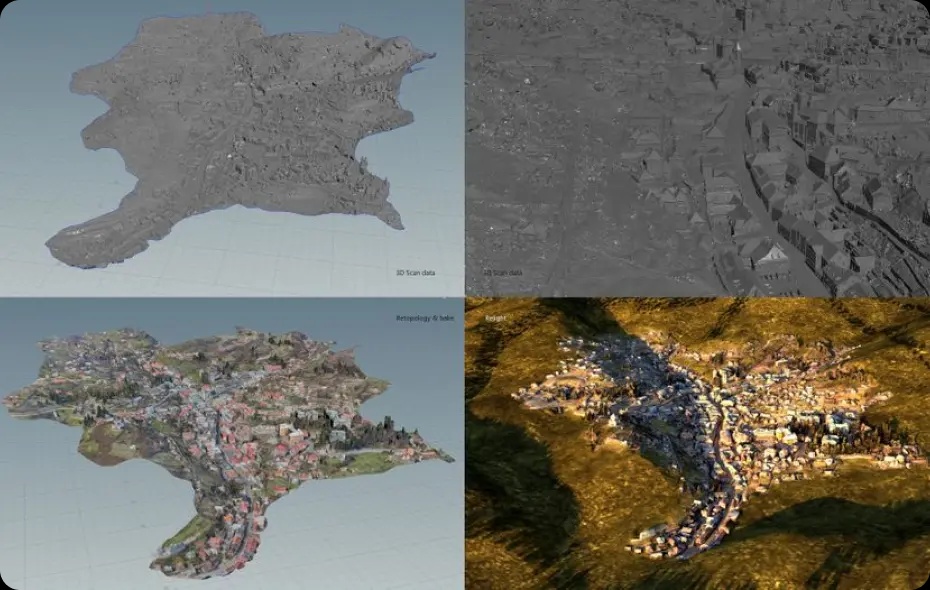
Aligning the 3D scan of the city with the ground surface obtained using geodata

Providing realistic simulation of water
Need a fully immersive AR & VR solution for your specific industry?
Our solutions
We conducted an exhaustive analysis and came up with a VR solution to bring a historical tour of Banská Štiavnica to a new level.
Our team implemented the vital functionality that allows taking users to a virtual world where Banská Štiavnica is a living town comprising many innovative and immersive scenes, exhibitions, and historical items. The main goal was to demonstrate important historical events of Banská Štiavnica. That’s why we paid great attention to creating 3D environments and characters.
So, how to create a VR tour? The Onix team offered the following solutions:

Setting up regular communication that allows our team and clients to deal with a structured and transparent development process and deliver a valuable final product on time.


Optimizing the scanned town model to enable the virtual reality system to render this model in real-time. The original model included 16 million polygons and 14 textures in 8K resolution.

Сreating realistic water imitation in real-time. In one of the scenarios, the mine was flooding with water after the explosion. We built a simulation of fluid in Houdini and transferred it to Unity.
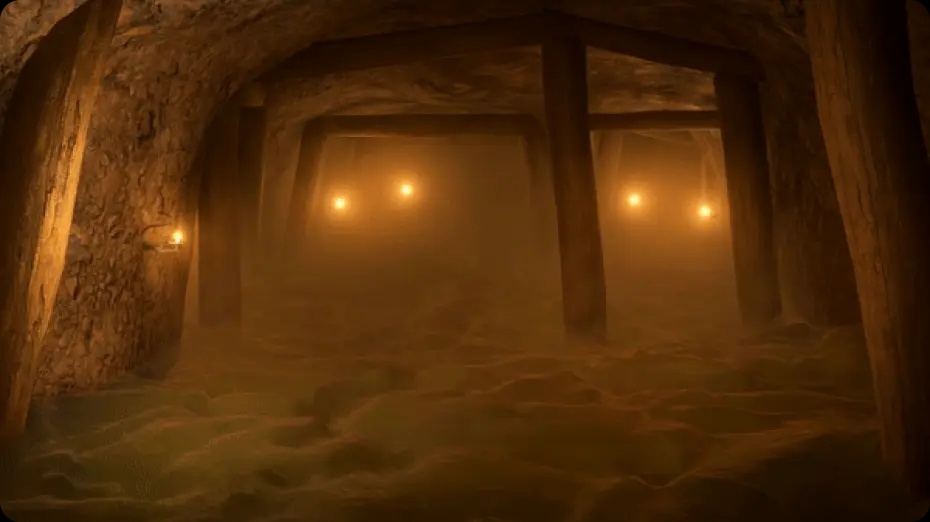

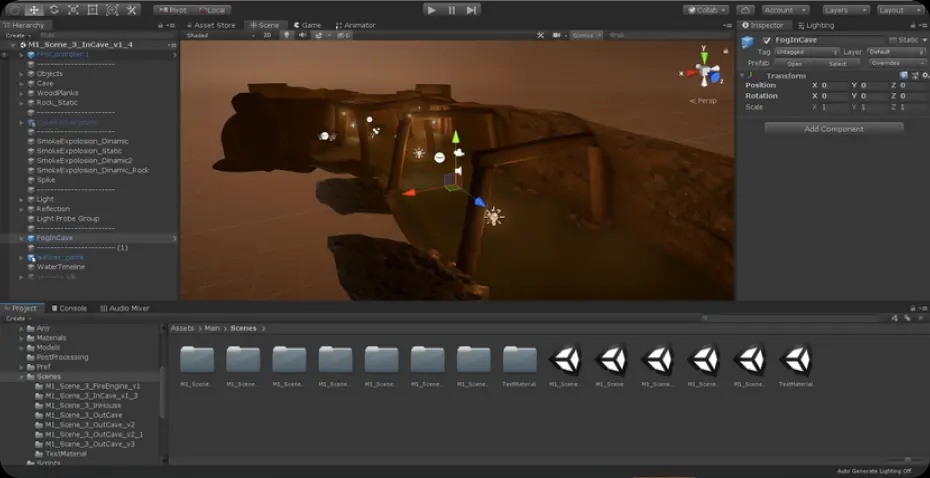
Implementing a shader for mixing textures based on a heightmap. We developed a shader that blends several materials depending on the vertices' color. This shader enabled us to achieve a high level of detail and add variety to the cave walls.

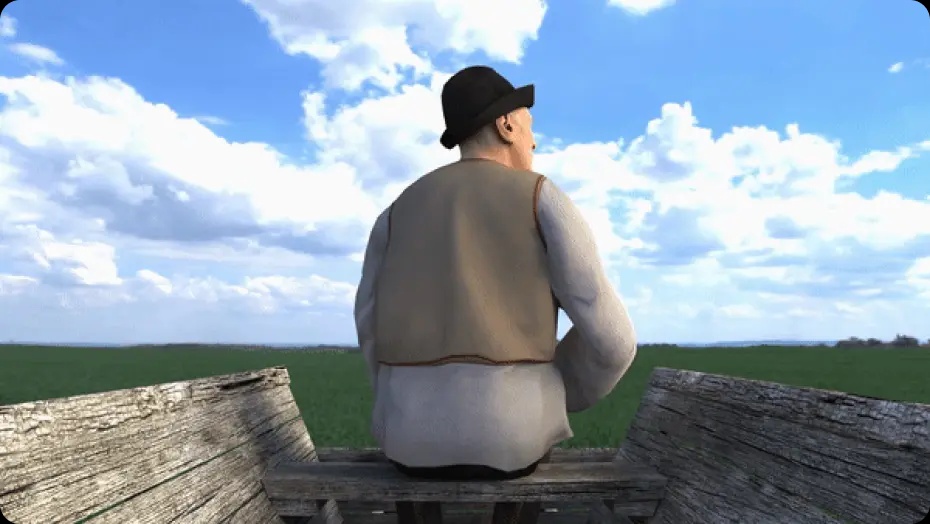
Preparing blend shapes used in facial animation to transition between expressions — like a character breaking into a smile from a neutral expression, and batching the character’s jaw movements with actual speech.

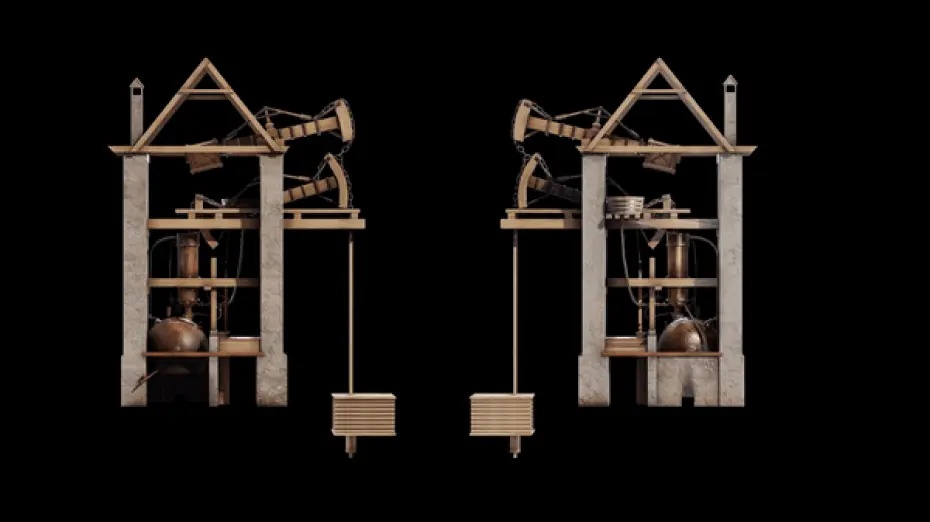
Optimizing scanned items from the local museum to provide a high level of historical credibility.
Core technology












Testimonial
“We have been cooperating with Onix for several years. Onix team has proven their reliability, creativity, professionalism and passion to sort out every task as a highest priority. Delivering excellent performance and quality, alongside great communication made this cooperation very smooth.
This is the reason why we highly recommend Onix and will use their services for us and our customers needs certainty again.”
Results
The Onix team helped our client to build a reliable VR app that allows visitors to discover much more about Banská Štiavnica in an engaging and informative manner.
Leveraging VR technology, our team built realistic graphics with historically accurate models that immerse users in the necessary atmosphere. We created a historical VR tour that differentiates the museum visit, provides a unique experience, and increases engagement.
Our team developed a unique historic VR experience, bringing the medieval town’s history to life through advanced virtual reality technology.
Need a fully immersive AR or VR solution for your specific business idea?


FAQs
What are the key steps to develop a high-quality VR history tour for museums or cultural institutions?
Start with historical research and content validation, then digitize real artifacts and locations. Optimize 3D scans for real-time VR, design immersive scenes and storytelling, and test performance on target hardware. Close collaboration with museum experts is essential throughout.
Which features should a professional VR history tour include to maximize visitor engagement and educational value?
Historically accurate 3D environments, animated characters with facial expressions and voice sync, interactive scenes, realistic physics (e.g., water, lighting), and a smooth, intuitive user experience designed for first-time VR users.
What are effective VR use cases for transforming the visitor experience at UNESCO World Heritage landmarks?
Virtual time travel to key historical moments, reconstruction of lost or inaccessible locations, immersive storytelling guided by characters, and safe exploration of fragile or restricted areas without impacting the physical site.
How do I implement a VR experience at a UNESCO World Heritage site while preserving and promoting its cultural value?
Use real geodata and museum-verified sources, digitize authentic artifacts, and prioritize education over entertainment. VR should complement the physical visit, not replace it, while respecting conservation and heritage guidelines.
How can VR reconstruction show visitors how a UNESCO World Heritage monument looked at different points in history?
By combining historical research, 3D modeling, and scene-based storytelling, VR can recreate the same location across different eras—allowing visitors to visually compare changes over time within one immersive experience.
What are the main challenges in historical VR tour development, and how can a professional studio help overcome them?
Key challenges include optimizing heavy 3D scans, maintaining historical accuracy, achieving realistic animations, and ensuring stable performance. An experienced VR studio handles optimization, pipelines, shaders, and real-time rendering while coordinating with historians and curators.
What performance and hardware considerations are important when developing historical VR tours for group installations?
Models must be optimized for real-time rendering, textures balanced for quality and performance, and interactions kept intuitive. The experience should run smoothly on both standalone and tethered VR headsets, be suitable for daily use, and be easy for museum staff to operate.