VR museum development case study: Anija Manor
Sharing Onix’s experience in interactive virtual museum development for Oculus Quest/Meta Quest 2
Learn how Onix helped to create a VR museum with gamification elements for one of Estonia’s best stately homes
Entertainment
Industry
3 specialists
Team size
Estonia
Location
3 months
Project duration
[ Business context ]
Anija Manor is an important historical site and one of the most beautiful country houses in Estonia.
Along with exquisite parks, venues for events like weddings and concerts, and other attractions, it features a permanent exhibition dedicated to the golden age of manors.
The management has been investing in technology to make the exhibition more exciting, especially for children. VR glasses already enable visitors to dive into the lost era, for example, following a historical figure on a virtual tour or attending a Baroque ball recreated through realistic 3D simulations.
In 2023, the management decided to enhance their virtual museum development with gamification. Their considerations were as follows:1.An on-premises VR game would appeal to younger visitors who may be uninterested otherwise. A virtual quest combining education about the area’s history with fun and discovery will make their museum experience more exciting and memorable. Happy customers write good reviews and spread the word.2.People who access the VR game online may become curious about Anija Manor’s rich history and decide to visit the estate to experience more first-hand.
Thus, Onix's VR experts were tasked with implementing gamification for increasing museum engagement.

[ Product scope ]
The tasks of Onix’s VR team included:
Creating a VR museum with a game for each of the five digitally rendered areas selected by the client.
Making the immersive museum experience available in several languages spoken in the area and easily accessible so that users of any age can start playing after putting on a VR headset.

Are you interested in developing a virtual museum experience?
Project details
Preparation
The client had prepared the project’s specifications, wireframes, graphic design elements, and other resources.
This enabled us to start the proper VR game development immediately.
Team assembly
The project team included:
One VR developer
One quality assurance engineer
One project manager
Project management
Onix’s teams adhere to Agile principles. During this small project with clear requirements, we were using the Kanban framework.
The museum virtual reality software went through the phases of:
Coding the functionalities required by the VR game’s different levels
Testing the game’s performance and usability
Deployment
Technical details
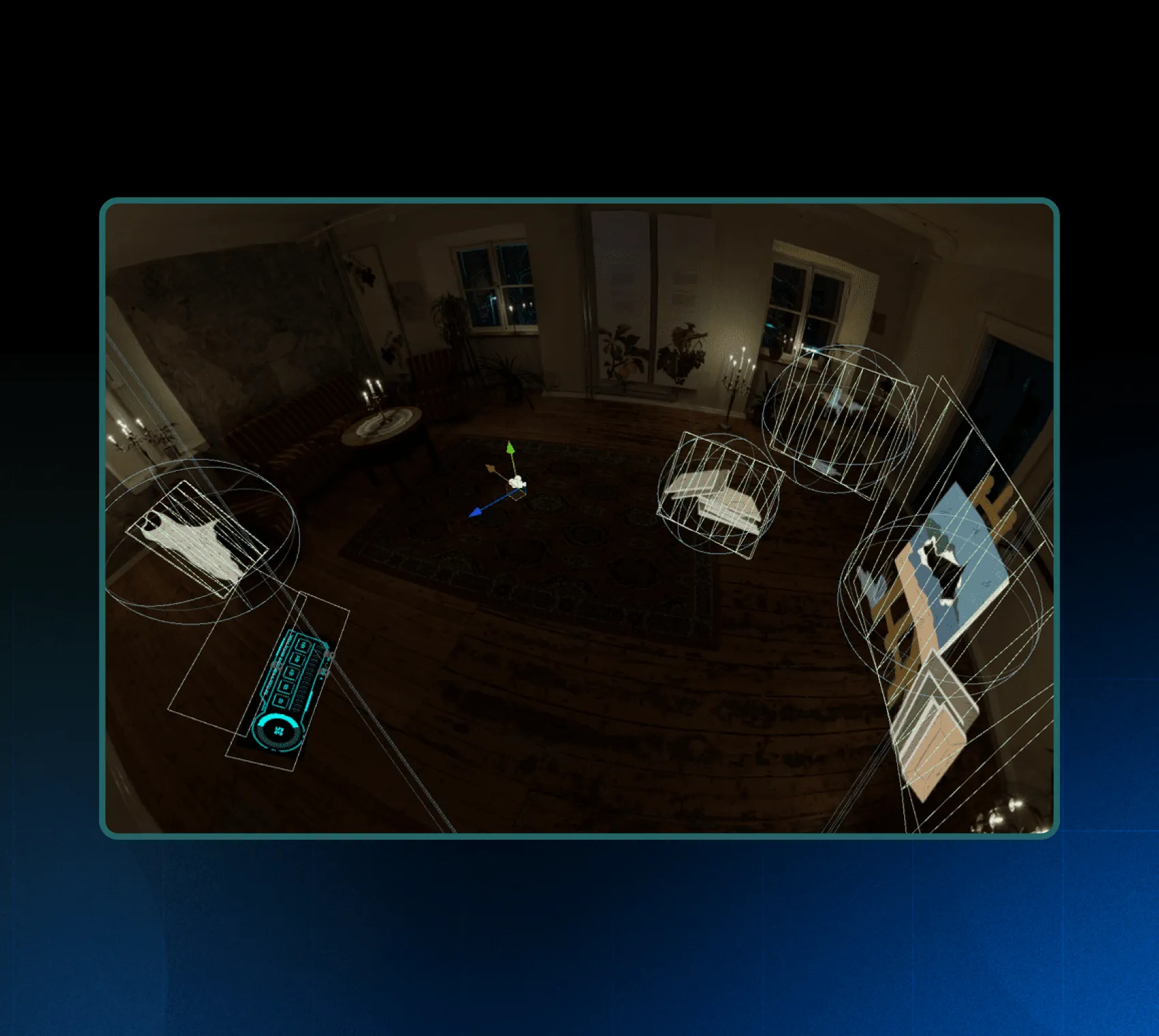
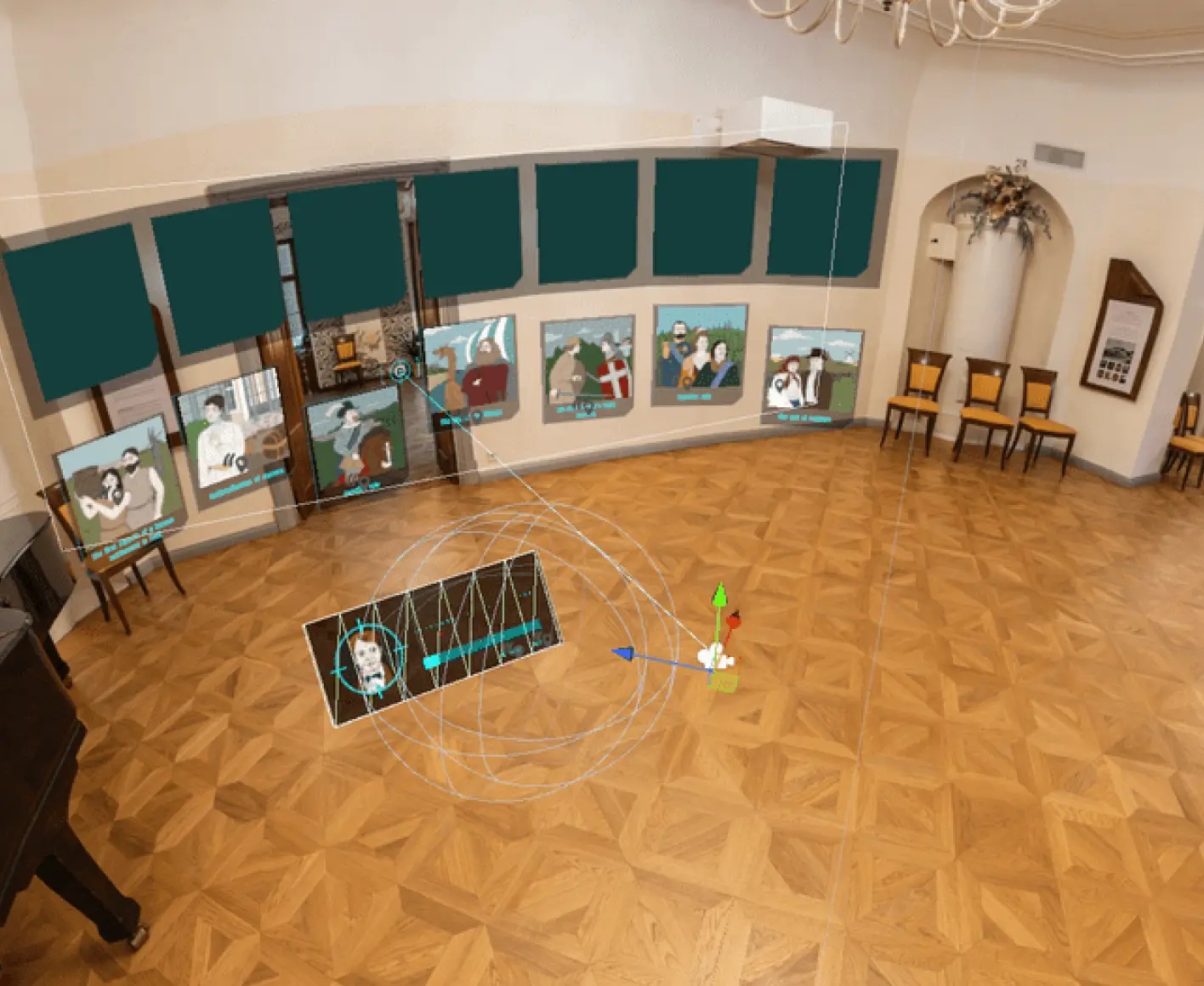
For this project, we quickly developed a system for positioning objects in a 360° panorama in the editor. For optimization reasons, only simplified components, materials, and packages were used.
Considering the possibility of targeting more VR platforms, we used Curved UI to interact with the user interface, enabling easier porting in the future.
Performance testing involved our own FPS/batching analysis script and Unity and Oculus profilers.

VR museum. Anija Manor's story
[ Our solutions ]
The museum VR game’s structure & features
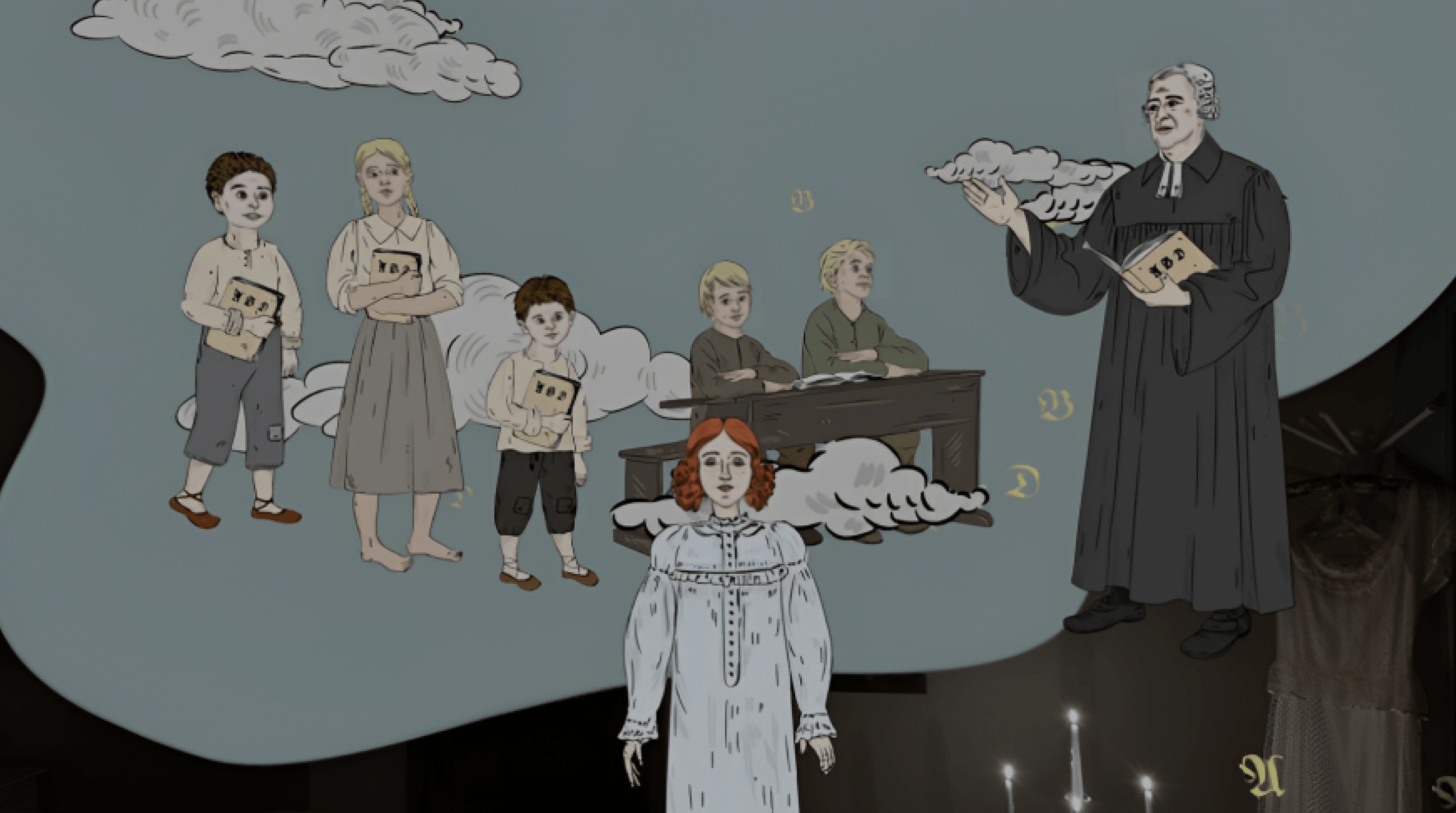
The game’s several levels are designed to provide a virtual tour of Anija Manor while educating the player through interactive experiences.
The app’s user flow reflects the virtual quest’s linear logic and the order of the museum’s featured rooms:1.Intro2.Rounds 1-5 set in five different rooms3.Epilogue
During each round, the player is positioned in a new area inside the museum where they answer questions or complete tasks related to the estate’s history. After each round, they are awarded scores and, in the end, rewarded with solving the titillating secret of the lady of the manor.
Intro
Anna Hedwig, the lady of Anija Manor, welcomes players. They learn that she has a secret that can be revealed if they complete five tasks before midnight.
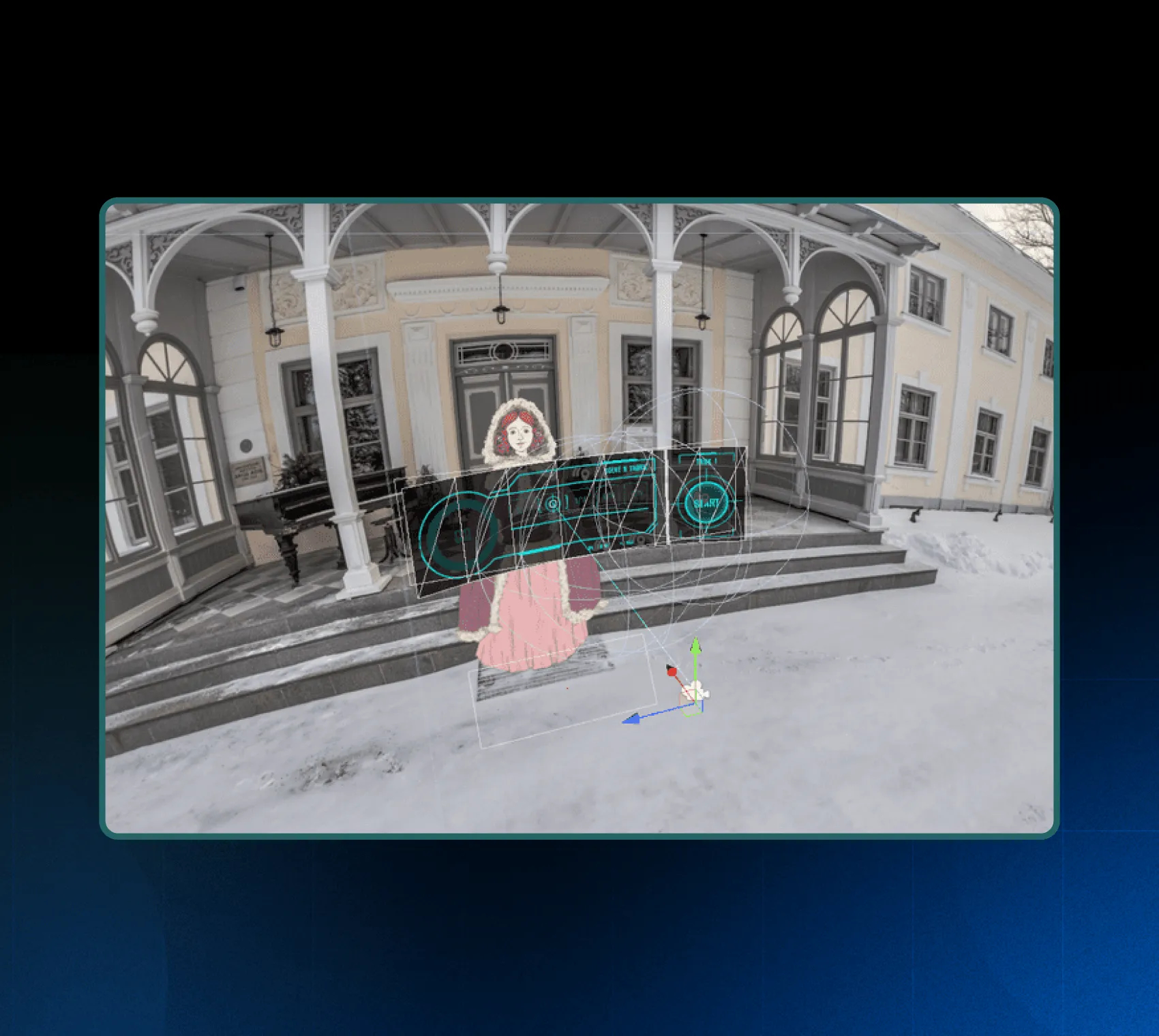
Round 1: Dining Room
Players must identify guests seated around the table. Some are genuine historical figures, and others are time travelers or fictional characters.
Players can interact with each guest and ask them to stay or leave, depending on historical accuracy.
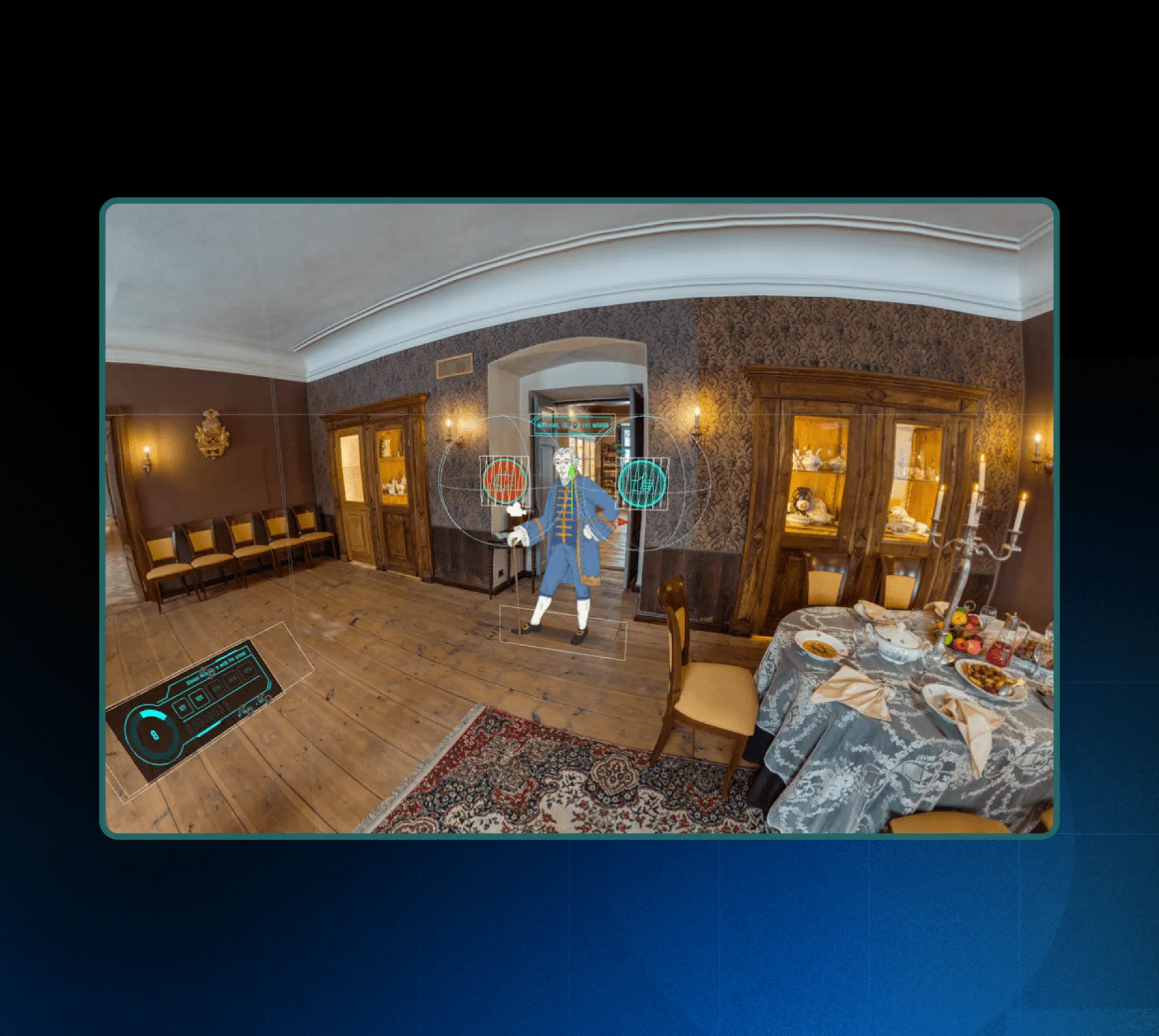
Round 2: Porch
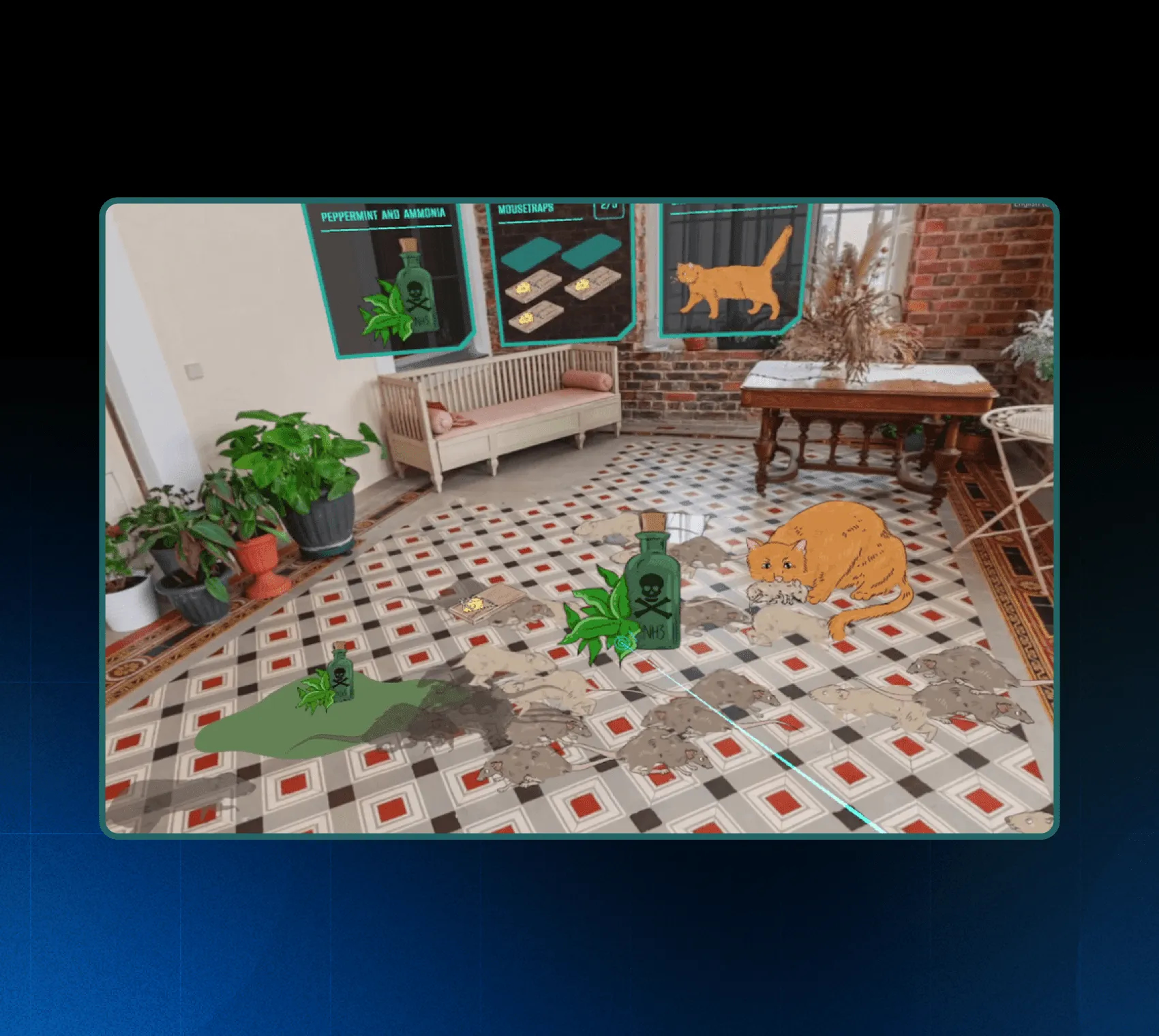
To battle rat infestation in the manor, the player can use peppermint, ammonia, mousetraps, and a cat to catch and repel the rats.
Quick decision-making is required to clear the porch effectively and earn more points.
Round 3: Salon
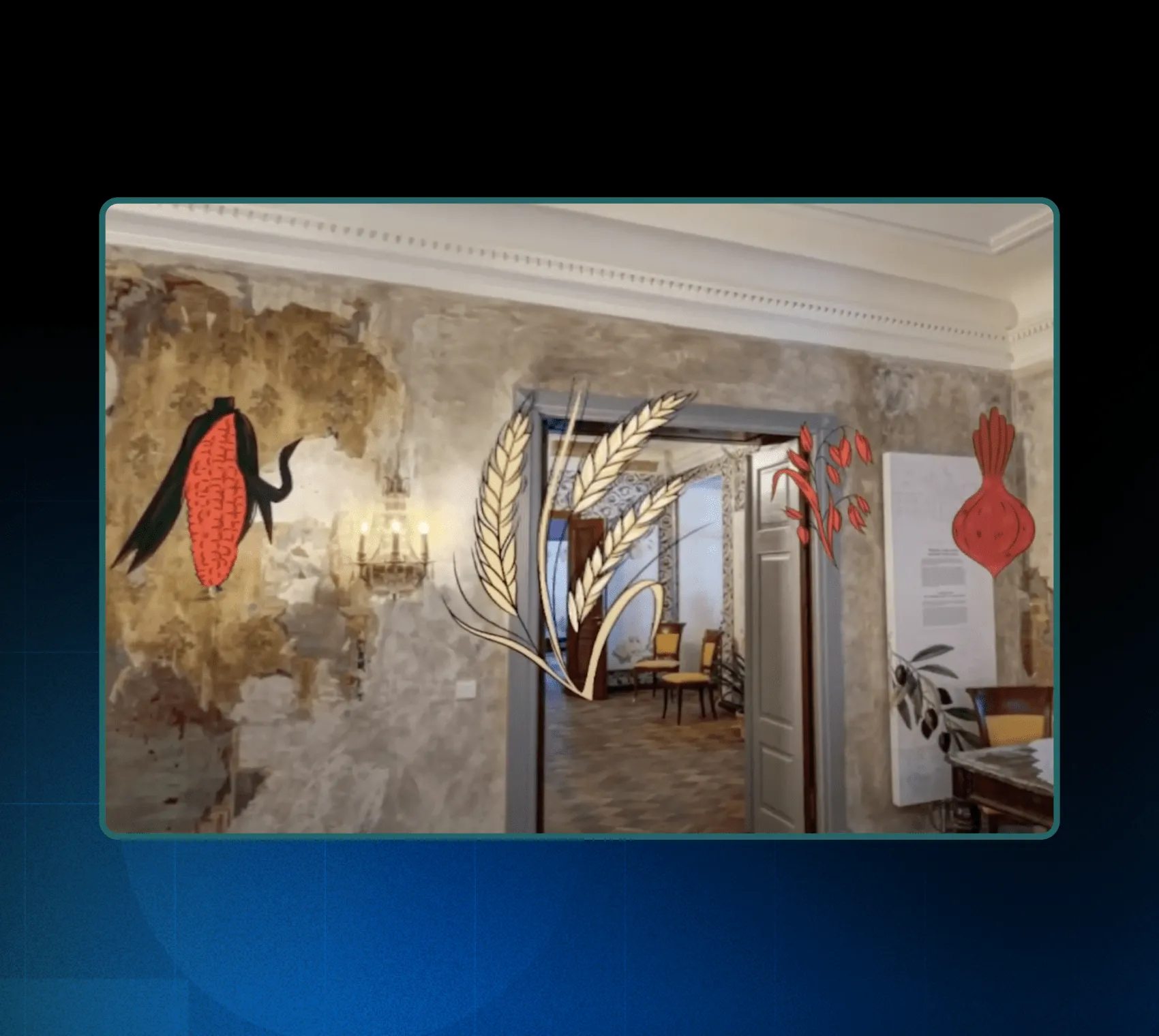
Players try their hand at managing Anija Manor`s economy in the 18th century.
They must quickly choose between businesses like potato cultivation, horse breeding, or vodka production and play a fun game to accumulate points.
Round 4: Great Hall
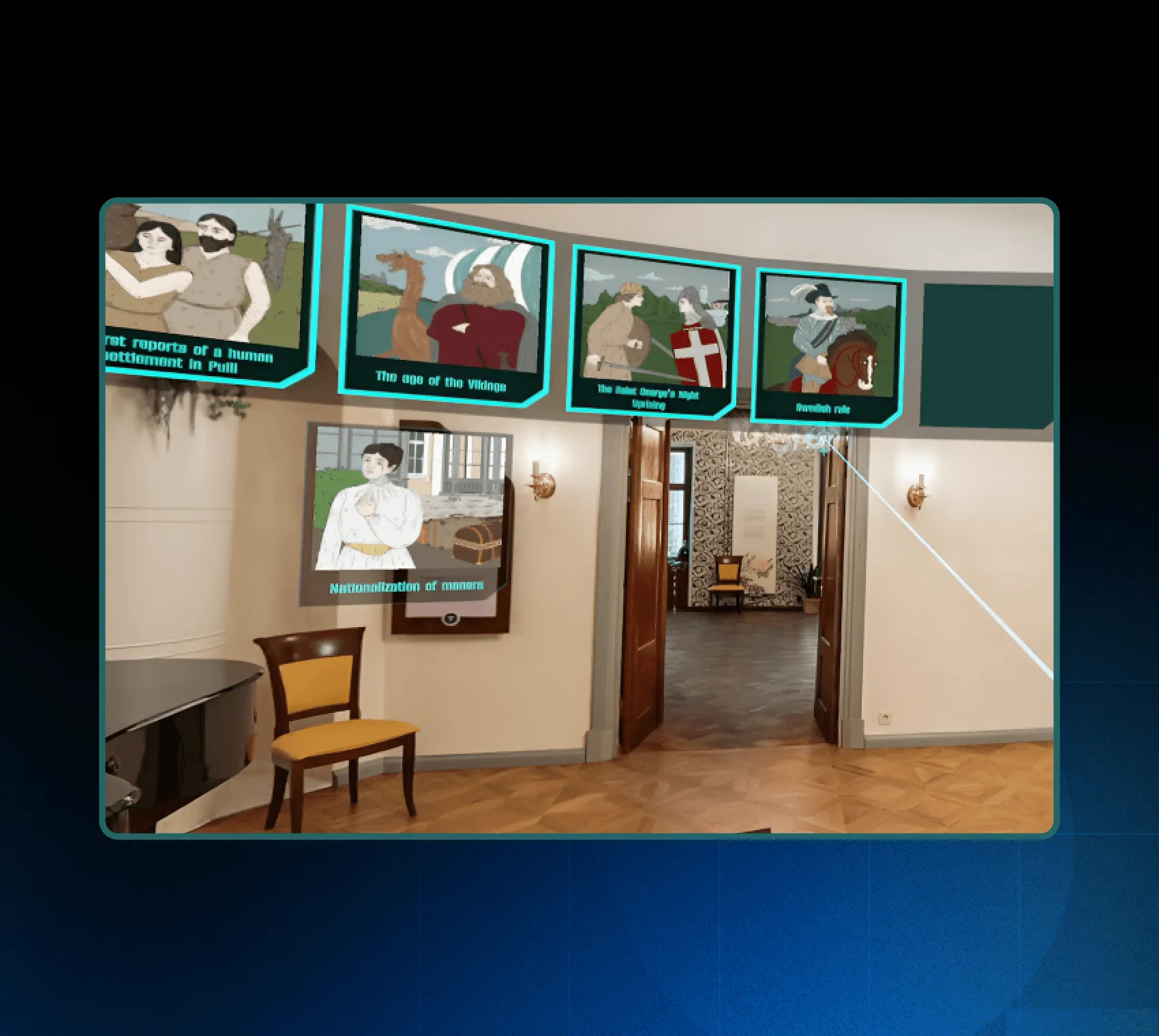
Players must rank various events and rulers in Estonian history in chronological order to earn points.
Round 5: Vestibule
Players have to arrange paintings, candles, and furniture while being distracted by ghosts and the spooky atmosphere of the manor at night.
Epilogue
The player finally learns whether Anna Hedwig has fallen in love, is terminally ill, committed a crime, or… what can it be?
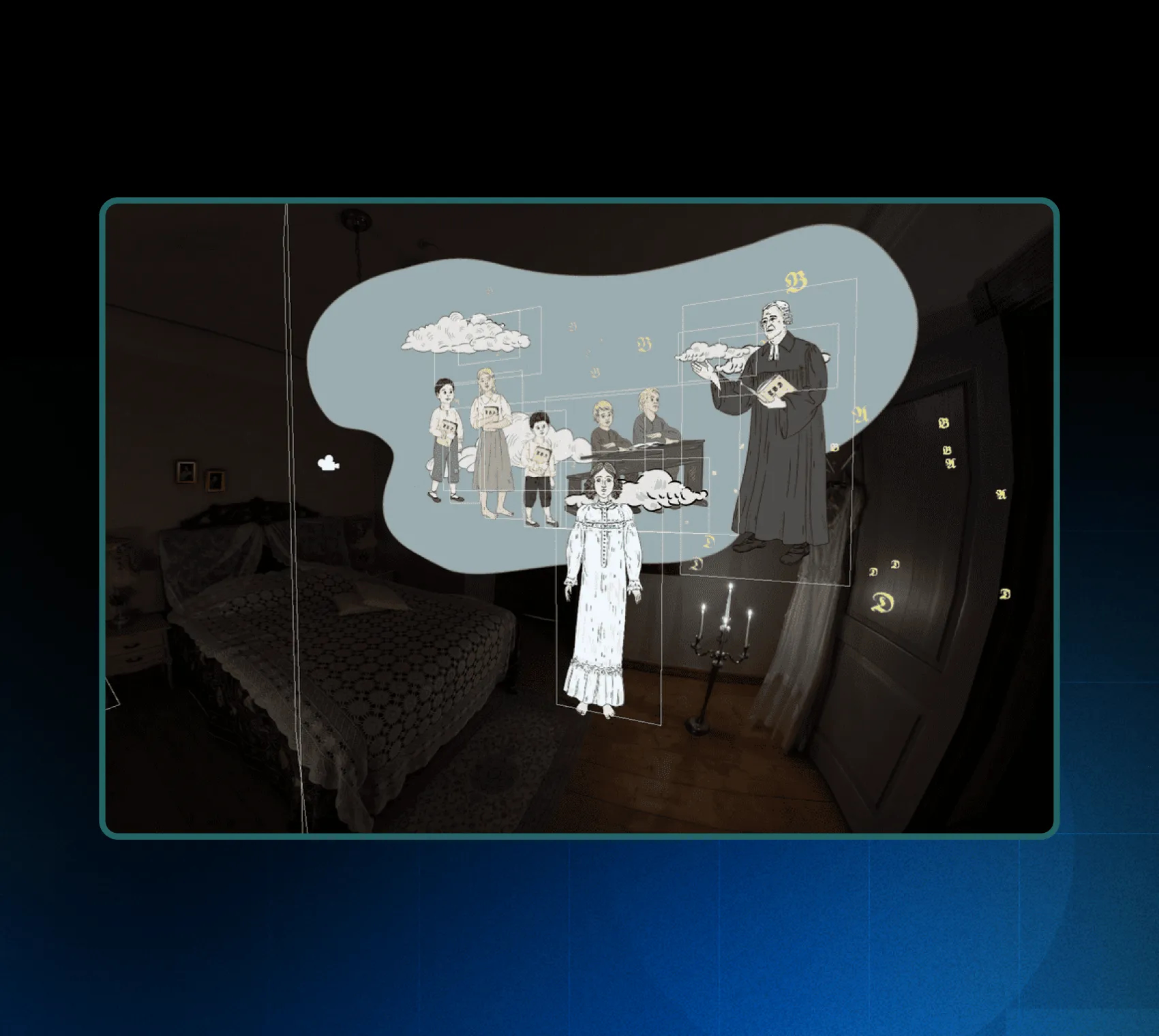
Some challenges and solutions
Realistic panoramas
The team made 360° photo panoramas to recreate the manor’s interiors and the atmosphere of a haunted mansion on a winter evening.
Some of the technical challenges included:
Correct positioning of the player inside the 360° image of each location
Accurate rendering of all visual and interactive elements with respect to the player and against the 360° images
Game management
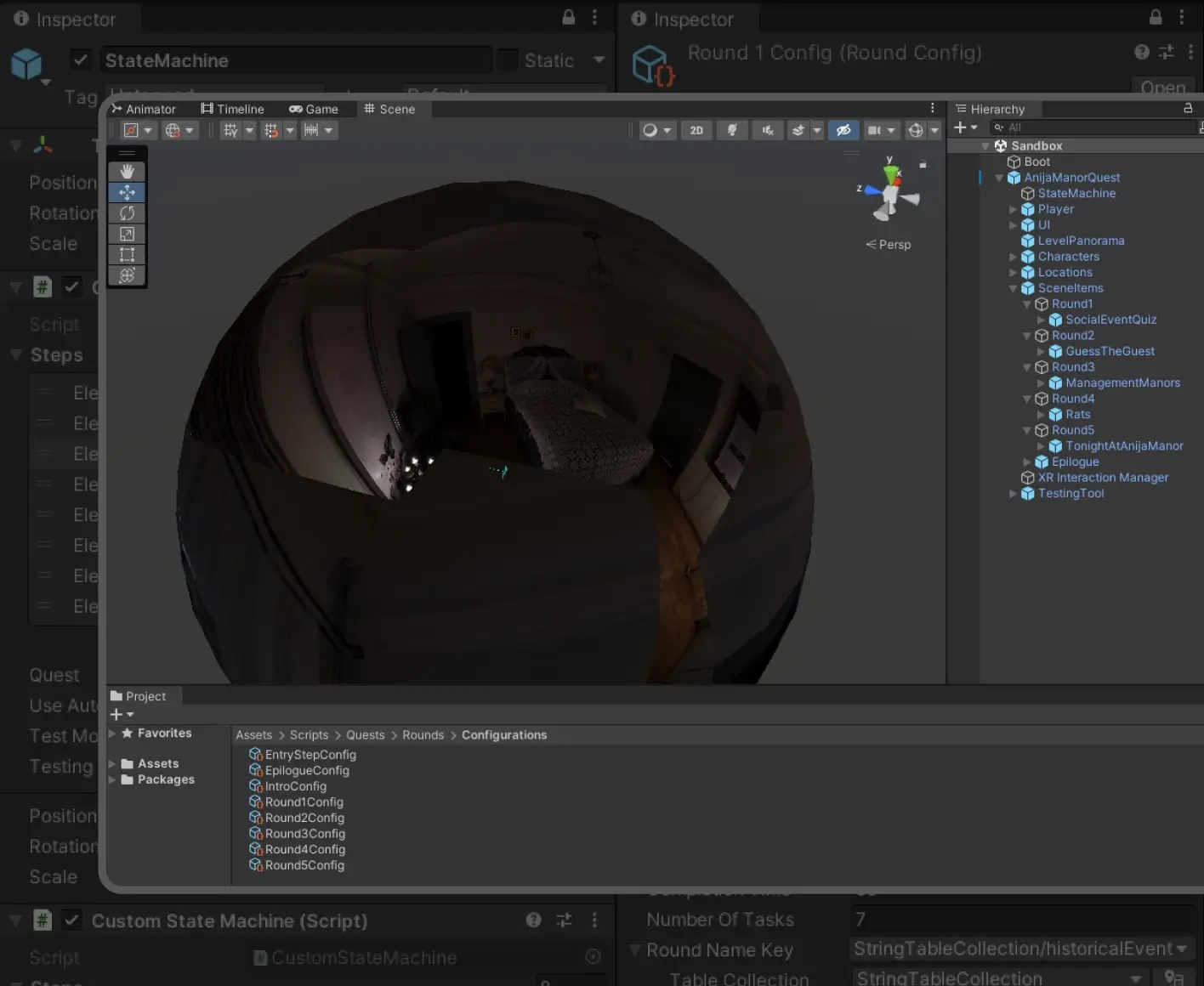
As the game contains rounds with a similar structure, we decided to develop it in a way that facilitates changing/adjusting the game levels’ content and interfaces in one place. This also makes removing levels or adding new mini-games easier and faster.
We implemented/added our own ‘Testing Tools,’ as well as Unity’s Profiler and Android Logcat testing functions that are extremely helpful with projects of similar “level/stage” structure. They make it easier to test the game levels without spending much time going through all the levels each time.
Localization
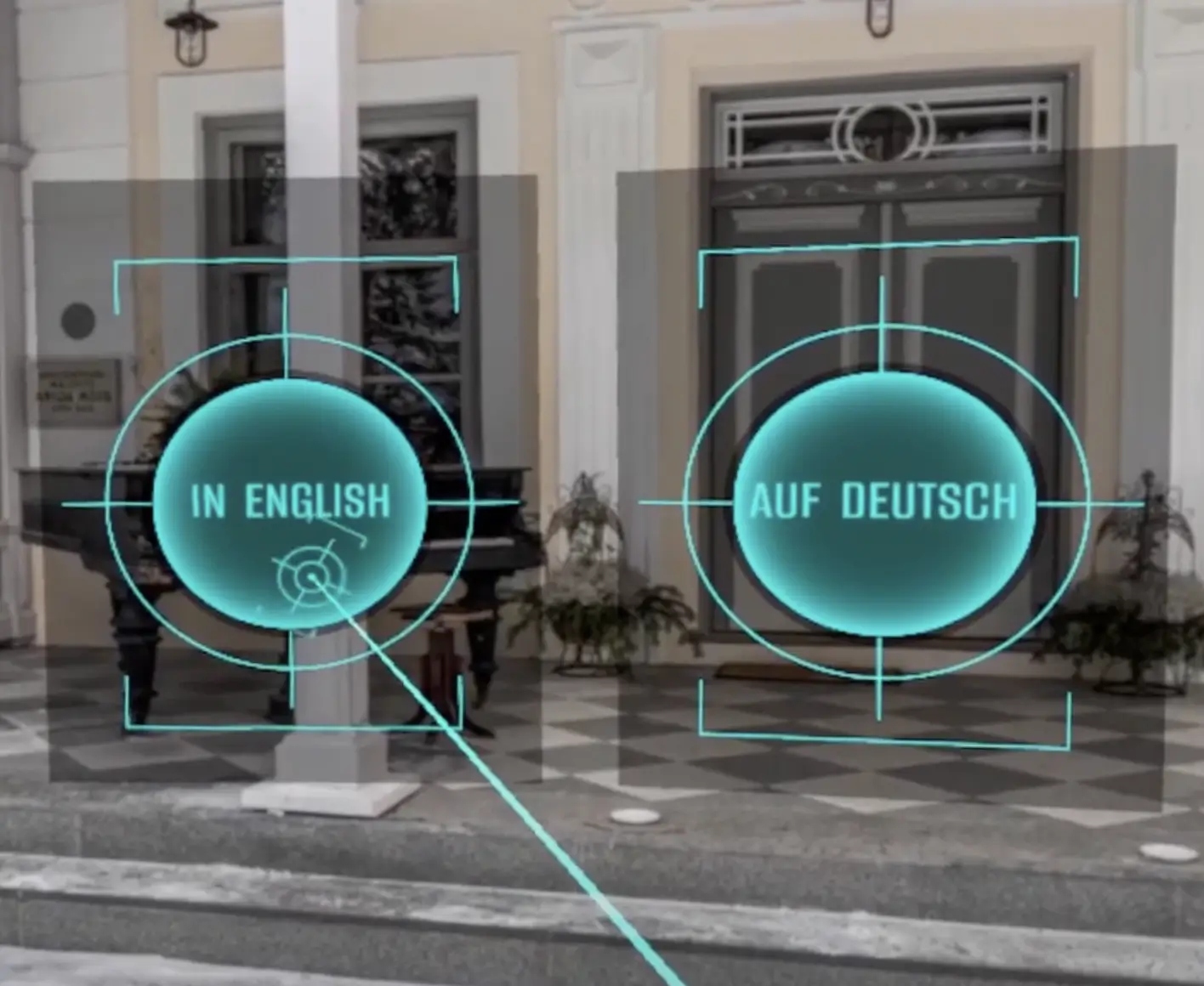
The team successfully performed the application localization into several languages:
Estonian
English
Finnish
Russian
German
Core technology stack we used
Unity,
Oculus SDK,
VR Interactions Framework,
Curved UI
[ Results ]
Onix’s VR game developers pride themselves on building a VR museum experience that
Exposes people of all ages to a part of Estonia’s history and culture through multi-sensory immersive experiences
Enables cultural exploration and learning for people who can’t visit Anija Manor in person
Increased the exhibition’s appeal using modern technology

See other related projects
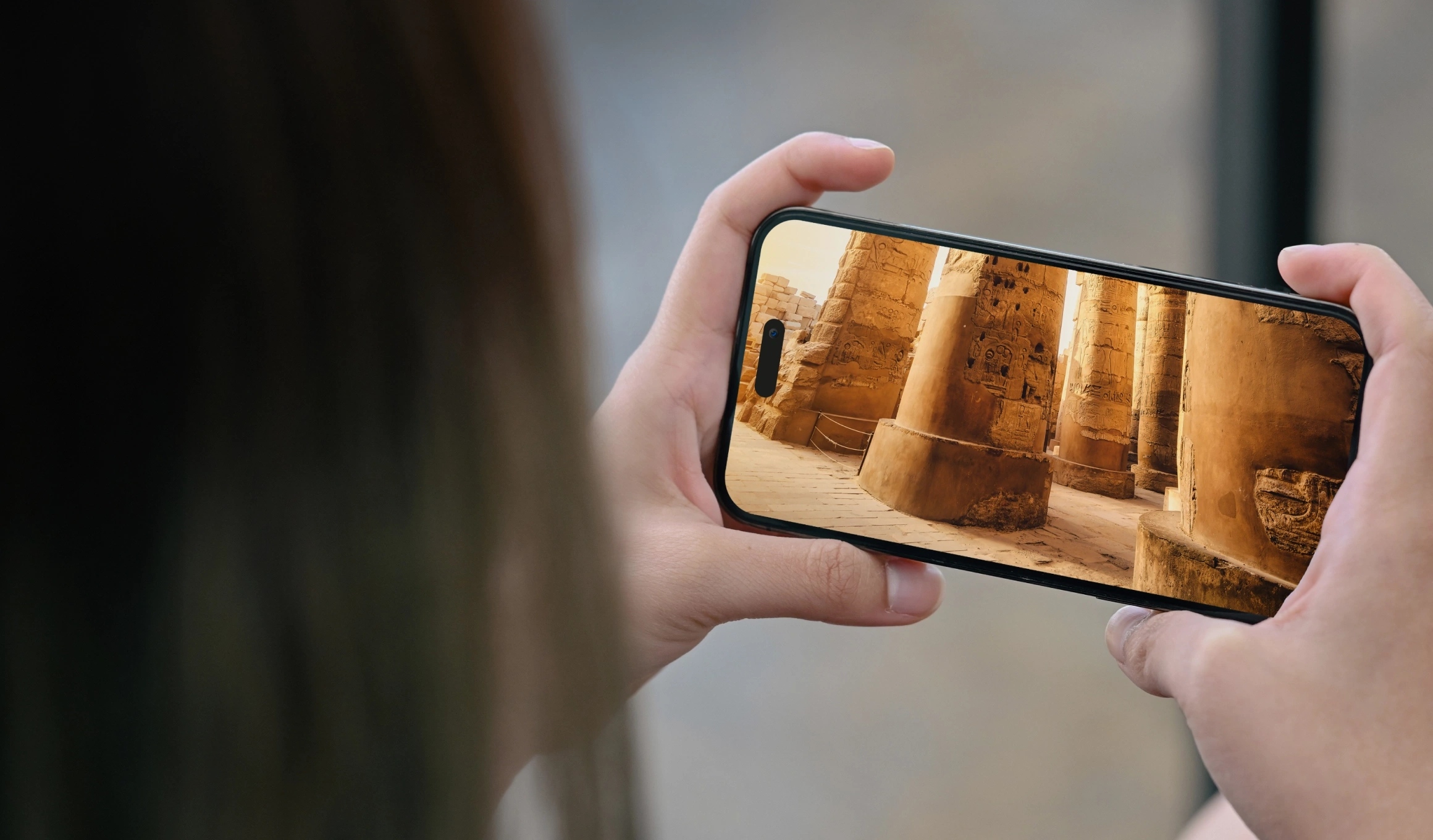

Slovakia
Tourism
Unique VR tour to engage and educate
visitors about Banská Štiavnica's
history
Transformed historical tour with VR implementation
Unique VR tour to engage and educate visitors about Banská Štiavnica's history
Services provided:
Onix developed a VR app, digitized museum items, implemented realistic animations, optimized 3D models for real-time rendering & simulated water effects
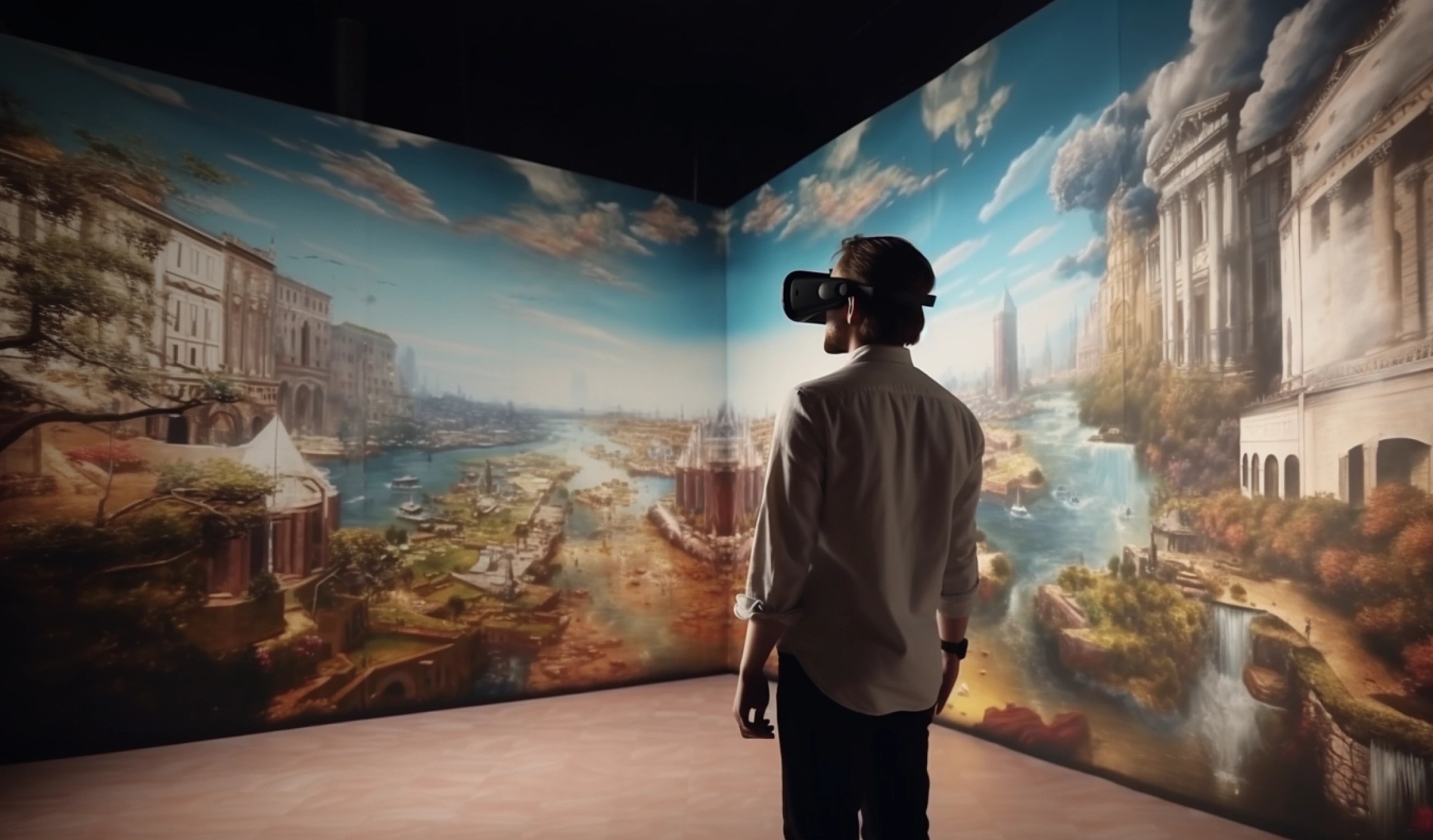

USA
Entertainment
Timescope is a VR app for viewing
antique photos that brings history to
life
VR app to explore 19th-century stereoscope photos
Timescope is a VR app for viewing antique photos that brings history to life
Services provided:
We offered complex VR development across platforms, created a unique 3D environment with custom shaders, retouched photos & curated historical music
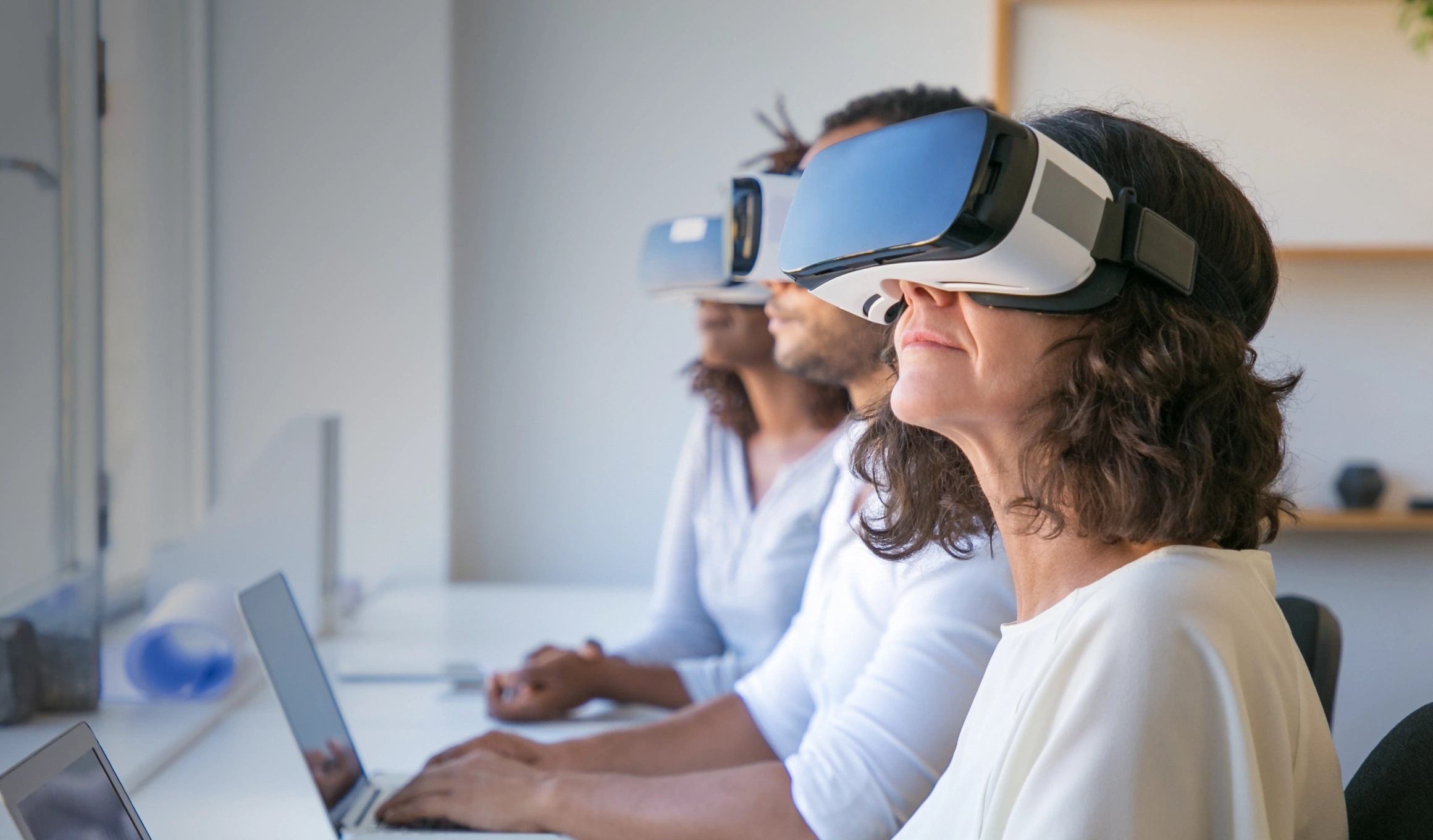

Germany
Communication
Virtual office to book conference halls
in a VR environment
Virtual space for immersive meetings & presentations
Virtual office to book conference halls in a VR environment
Services provided:
We offered end-to-end VR development, created a seamless coworking with realistic graphics, gesture-controlled interactions & smooth desktop streaming


Are you interested in developinga virtual museum experience?
FAQs
What are the key steps to develop a high-quality VR history tour for museums or cultural institutions?
Firstly, describe the main VR experience mechanics, keeping in mind that users can be of all ages and all components must be both informative and interactive to keep them engaged.Choose the museum deployment and integration model: standalone headsets (Meta Quest), VR kiosks with PC VR, a dedicated mobile application with XR capabilities, or web-based information pages.Conduct necessary research, validate sources, and collect materials, such as maps, drawings, archaeological surveys, photographs, video and audio recordings, etc.Develop scene storyboards and navigation logic, including user movement, points of interest (POIs) on buildings, objects, or characters, the field of view, and scale.Task 3D artists with reconstructions of artifacts, buildings, environments, and assets using photogrammetry, hand modeling and procedural reconstruction, or 360° projections.Have 3D artists optimize the project using low-poly meshes, baked lighting, texture atlases, and Level of Detail models.Generate or record the voiceover, using AI or with professional narrators, in several languages, if needed. Find sounds/references for the spatial audio, including directional cues for POIs.Design the interactivity and user experience (UX), including scene navigation (teleportation/smooth movement), controls, object viewing and manipulation, highlighted POIs, localization, timeline sliders (before/after views), quick location switching, and general application navigation.Have VR developers implement the scene management, input handling, interaction logic, and analytics for further application improvement and user and business metrics tracking.Then, they have to perform technical optimization to maintain 72–90 FPS, optimize draw calls and shaders, and reduce motion sickness (teleportation, snap turns).Test the VR tour with the museum staff, first-time VR users, and target demographics to assess and improve usability, comfort, accessibility, safety, and engagement.Install the VR tour on site, provide a link to it on your website, or publish it on relevant platform marketplaces.
Which features should a professional VR history tour include to maximize visitor engagement and educational value?
Guided narrative layer (voice narration, scene-based storytelling, pause/replay controls, etc.)Spatial reconstruction with 1:1 scale environments, historically accurate architecture and artifacts, and visual markers for verified and speculative reconstructions, if neededInteractive points of interest (POIs) with visual cues and short explanationsInformation system that may also include “deep dive” layers of text panels, archival images, or scholarly commentaryHistorical timeline and views showing construction phases, destruction, restoration, or social or urban evolutionFirst-person or character-based stories or reconstructed daily life scenesCurator commentary layer with citations and expert insights into uncertainties, debates, archaeological evidence, etc.Spatial audio with directional ambient sounds, audio cues for POIs, and period-appropriate soundscapesInteraction model using gaze-based selection, controller input, or hand trackingExploration modes: linear guided tour and/or free-roam explorationInteractions (inspection of 3D artifacts, accessing annotations, etc.)Subtitles and captions in multiple languages, if neededAdjustable narration speedSeated and standing modesLow-motion / no-locomotion optionLighting contrast controlAnalytics tools for tracking session duration, POIs visited, drop-off points, etc.
How do I plan a VR history tour project, from scriptwriting and 3D reconstruction to voiceover and interactivity?
The planning for a professional-grade VR history tour for museums or cultural institutions should start with determining the project’s educational goals, target audience, and experience type.Identify any constraints regarding time, budget, available hardware, technology, etc.Choose the deployment and museum integration model: standalone VR, PC VR, mobile app with XR, or WebXR.Select the project success metrics, such as engagement time, completion rate, learning outcomes, attendance, monthly revenue, etc.Approve the project budget, schedule, and deadlines.Engage historians, archivists, and curators to conduct the necessary research and scriptwriting. Gather maps, floor plans, artworks, photos, archaeological surveys, and other materials.Outline the script’s structure: historical context, timeline, key locations, events, objects, and the distinction between facts and reconstructions.Write the master script, scene-by-scene narration, on-screen text and captions, and interaction prompts.Design the user flow, scene transitions, interaction model, subtitles, audio descriptions, and comfort settings.Select the teams to complete the sound design, voiceover, 3D art, and VR development, and schedule the project milestones.Prepare groups of users to test the product and plan the staff training, headset hygiene and reset flows, analytics and usage tracking, and other activities that will follow the VR app deployment.
What are the technical requirements and software tools needed to develop a professional VR historical tour experience?
Hardware: Meta Quest 3 (recommended), PC VR (RTX 3060), hand tracking (optional)Audio and voiceover tools: Adobe Audition, ReaperUX and flow design: Figma, Miro3D tools: Blender, Maya, HoudiniPhotogrammetry: RealityCapture, Agisoft Metashape, MatterportTexturing: Substance Painter or DesignerEnvironment assets: Quixel MegascansEngine: Unity (recommended)VR SDKs: OpenXR, Meta XR SDK, SteamVRBackend (optional): Firebase and custom API for analyticsVersion control: Git, Plastic SCM
How can I convert existing historical exhibits into an immersive VR tour to attract more visitors and schools?
Firstly, define the target audiences, learning purposes, deployment model, and hardware.Set the KPIs, such as user engagement metrics, conversion rate from VR visitors to repeat museum visits, ticket revenue uplift, school bookings, post-experience quiz results, NPS from educators, etc.Select exhibits for the VR project, such as reconstructed ancient cities, battlefields, interiors, significant artifacts, a story of transformation over time, or areas inaccessible to visitors.Choose the VR experience format, e.g., a 360° tour, a full interactive 3D reconstruction, or a gamified school-focused program.Develop the narrative and educational framework: introduction, scene exploration, narration, artifact inspection, decision-making scenarios, quizzes, and other knowledge checks.Reconstruct the environment using historical sources, photogrammetry of existing artifacts, and 3D modeling of missing structures.Develop interactivity and engagement mechanics, such as clickable artifacts with contextual information, timeline sliders to see changes over years, or embedded quizzes with performance tracking.Implement accessibility: multilingual narration, subtitles, audio descriptions for visually impaired users, adjustable locomotion (teleport vs free movement), seated mode options, etc.Organize the deployment, such as on-site VR pods bookable for school groups, preloaded headsets, a teacher guide, or offline functionality for portable school kits.
How can I integrate interactive quizzes and guided narration into a historical VR tour to boost learning outcomes?
Start by defining the learning objectives for the VR experience, e.g., cause-and-effect analysis or artifact interpretation.Structure the experience around them: design a guided narration by a virtual curator, a historical character, or a contextual voiceover, and use spatial audio techniques to guide visitors’ attention to key educational moments.Use branching scenarios, where answers determine subsequent narrative paths, to reinforce active learning and improve retention.Place micro-assessments at transition points, such as the end of a historical chapter or before advancing to a new era. These can be designed as traditional multiple-choice forms, object interactions, dialogue choices, or environmental problem-solving tasks.Incorporate adaptive feedback and performance tracking. If a user answers incorrectly, the narration can provide contextual clarification and invite re-exploration.For school deployments, integrate analytics dashboards that capture quiz results, time spent in scenes, and interaction patterns, allowing educators to assess comprehension.
How do I choose a VR development company to build an interactive historical VR tour for my museum?
It is crucial that the VR studio has experience specifically with museums and cultural heritage organizations. For example, besides the Anija Manor VR, Onix built a virtual tour for a museum at Banská Štiavnica, a UNESCO World Heritage Site in Slovakia. Our team blended scanned museum exhibits with digital panoramas to immerse visitors deeper in the Middle Ages.Onix’s 3D artists and developers are experts at creating a sense of space, light, textures, and details, photorealistic rendering techniques, and accurate simulation of real-world conditions, which are essential for truly immersive historical VR tours.Museums also require efficient workflow management, resource allocation, and cost-efficiency. Optimizing resources involves optimal tools, efficient rendering techniques, and competent personnel. Onix has all of these, and our rates enable outsourcing clients to save up to half of their project budget!